
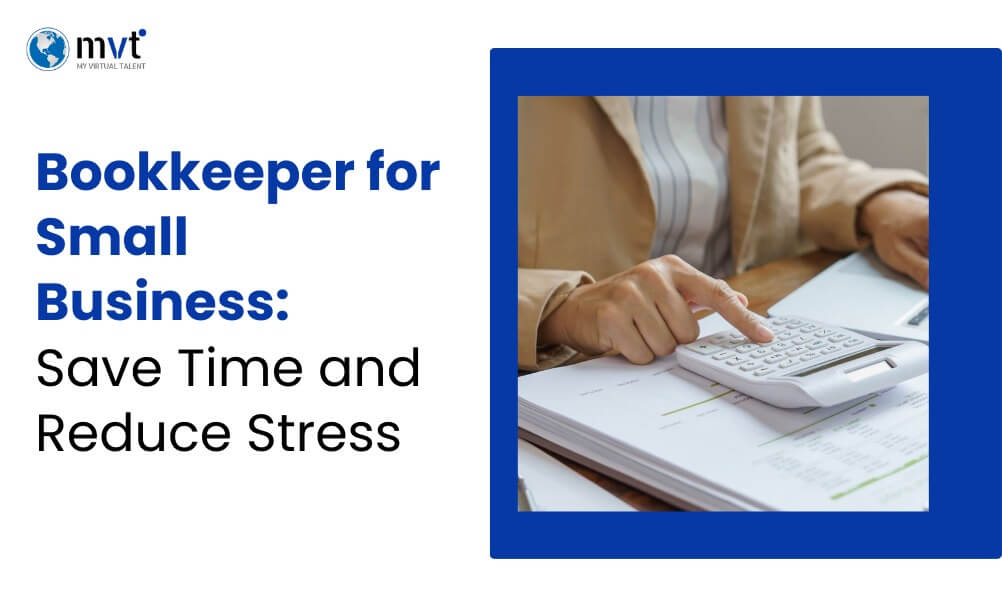
You are sorting through receipts from different vendors, checking your bank account again, and wondering if that invoice was already paid. Then you realize tax season is around the corner. If this feels familiar, you are not alone.
Running a small business takes a lot of energy. You focus on finding customers, improving your services, and managing daily work. Because of this, bookkeeping often gets delayed. Many business owners only look at their numbers when something feels wrong or when taxes are due. When you don’t have bookkeeper for small business, it creates stress and confusion.
In fact, many small business owners say bookkeeping and taxes are the hardest parts of running their business. Keeping track of income, expenses, and payments can feel overwhelming. One small mistake can lead to penalties, missed payments, or cash flow problems.
Hiring a bookkeeper for small business is not just about saving time. It gives you clear financial records, better control over your cash flow, and peace of mind. In this post, you will learn what bookkeeping really includes, why doing it alone can cost you more, and how to choose the right bookkeeper for your needs.
What Does a Bookkeeper for Small Business Actually Do?
At its core, a bookkeeper tracks your business’s financial transactions. They record income and expenses, reconcile bank statements, manage invoices, and prepare financial reports that give you a clear picture of where your money is going.
It’s important to note the difference between a bookkeeper and an accountant. While both play crucial roles in your financial health, bookkeepers handle the day-to-day tasks think data entry, invoice processing, and payroll. Accountants, on the other hand, focus on tax strategy, financial planning, and advisory services. Many small businesses need both, but a bookkeeper is often the first hire.
Common tasks that fall under small business bookkeeping include:
- Payroll processing: Making sure every employee is paid correctly and on time, every time.
- Accounts payable and receivable: Keeping track of bills you owe and payments others owe you.
- Expense categorization: Managing costs to make tax preparation and financial analysis simpler.
- Bank reconciliation: Comparing your records with bank statements to spot any discrepancies.
- Preparing tax documents: Gathering and organizing financial information so your accountant can file returns smoothly.
According to QuickBooks, proper bookkeeping also helps you spot trends, manage cash flow, and make data-driven decisions all critical for long-term success.
The Hidden Costs of DIY Bookkeeping
Many small business owners start out handling their own books. After all, how hard can it be to track a few expenses? But as your business grows, so does the complexity of your finances. What once took an hour a week can quickly balloon into several hours time you could be spending on sales, marketing, or product development.
There’s also the risk of costly errors. Incorrect tax filings can lead to penalties. Missed deductions mean you’re leaving money on the table. Poor cash flow management can result in late payments to suppliers or missed opportunities to invest in growth.
Then there’s the stress factor. Running a business already means wearing multiple hats. Adding bookkeeping to the mix increases your chances of burnout and mistakes. When you’re tired and overwhelmed, details slip through the cracks and in finance, details matter.
The truth is, DIY bookkeeping often costs more than it saves. Between the time investment, the potential for errors, and the mental load it adds, most small business owners reach a point where professional help isn’t just nice to have it’s essential.
When Should You Hire a Bookkeeper For Small Business?
So when is the right time to bring in a bookkeeper for small business? Here are some clear signs:
- Your transaction volume is growing: If you’re processing dozens (or hundreds) of transactions each month, manual tracking becomes unsustainable.
- You’re losing track of cash flow: Not knowing how much money you have available or where it’s going—is a red flag.
- Tax deadlines are causing panic: Scrambling to gather documents at the last minute increases the risk of errors and penalties.
- You’re planning to scale: Growth requires solid financial foundations. A bookkeeper helps you build them.
- You’re spending too much time on finances: If bookkeeping is taking more than a few hours per week, it’s time to delegate.
If you hire a full-time, in-house bookkeeper isn’t in your budget, consider outsource accounting services. Virtual bookkeepers offer flexibility and expertise without the overhead costs of a full-time employee. Many small businesses find this approach ideal, especially during periods of rapid growth or seasonal fluctuations.
The key is to hire early. Waiting until your finances are in chaos makes the transition harder and more expensive. Starting with professional small business bookkeeping from the beginning sets you up for smoother operations down the line.
In-House vs. Outsourced: What’s Right for You?
Once you’ve decided to hire help, the next question is: should you bring someone in-house or outsource the work?
In-house bookkeepers offer more direct control and immediate availability. They’re physically present (or dedicated to your business full-time), which can be valuable if you prefer face-to-face communication or have complex, industry-specific needs. However, this option comes with higher costs salary, benefits, office space, and training all add up.
Outsourced bookkeeping services provide flexibility and often cost less. You gain access to experienced professionals who work with multiple clients, bringing a breadth of knowledge to your business. Many outsourced givers also use advanced accounting software, keeping your systems up to date without any additional investment.
Here’s a quick comparison:
| Factor | In-House Bookkeeper | Outsourced Service |
|---|---|---|
| Cost | Higher (salary + benefits) | Lower (pay for hours used) |
| Flexibility | Limited to one person’s availability | Scalable as needed |
| Expertise | Dependent on hire | Access to experienced team |
| Software | You provide and maintain | Often included in service |
| Control | High | Moderate |
As noted by the U.S. Small Business Administration, outsourcing non-core functions allows business owners to focus on revenue-generating activities while maintaining financial accuracy.
How to Choose the Right Bookkeeper for Small Business
Finding the right bookkeeper isn’t just about their credentials; it’s about finding someone who fits your business and your way of working. Here’s what to keep in mind:
- Certifications and experience: Look for professionals with recognized credentials like Certified Bookkeeper (CB) or QuickBooks ProAdvisor. Industry-specific experience is a plus; someone familiar with businesses like yours will better understand your unique challenges.
- Clear communication: A great bookkeeper can explain financial concepts in plain, easy-to-understand language. If they can’t communicate clearly, you won’t get the insights you need to make smart decisions.
- Reliability: Bookkeeping is time-sensitive. Late reports or missed deadlines can create serious issues. Ask for references and check their track record for consistency.
- Software compatibility: Make sure they’re comfortable with the accounting software you use or plan to use, like QuickBooks, Xero, or FreshBooks.
- Cultural fit: You’ll be sharing sensitive financial information, so trust and comfort are key. Consider starting with a trial period or an initial consultation to see how well you work together.
Don’t be afraid to request references or examples from other small business clients. A professional bookkeeper will gladly show how they’ve helped businesses like yours thrive.
Take Control of Your Finances and Your Peace of Mind
Hiring a bookkeeper for small business is more than a practical decision it’s an investment in your company’s future. With accurate records, clear financial insights, and more time to focus on growth, you’ll be better positioned to make strategic decisions and avoid costly mistakes.
The benefits are clear: less stress, fewer errors, and a stronger financial foundation. Whether you choose an in-house professional or outsource accounting services, the key is to act before bookkeeping becomes a crisis.
Your business deserves better than last-minute scrambles and sleepless nights over spreadsheets. Professional small business bookkeeping gives you the clarity and confidence to move forward with purpose.
Ready to stop worrying about your books? Let MyVirtualTalent handle your bookkeeping while you focus on growing your business.

Looking for fresh content?
Get articles and insights from our weekly newsletter.
Recent Posts






Reduce Your Marketing Spend By 70% And Grow Your Revenue Organically 10X Faster!
Get a Free Quote Today!