
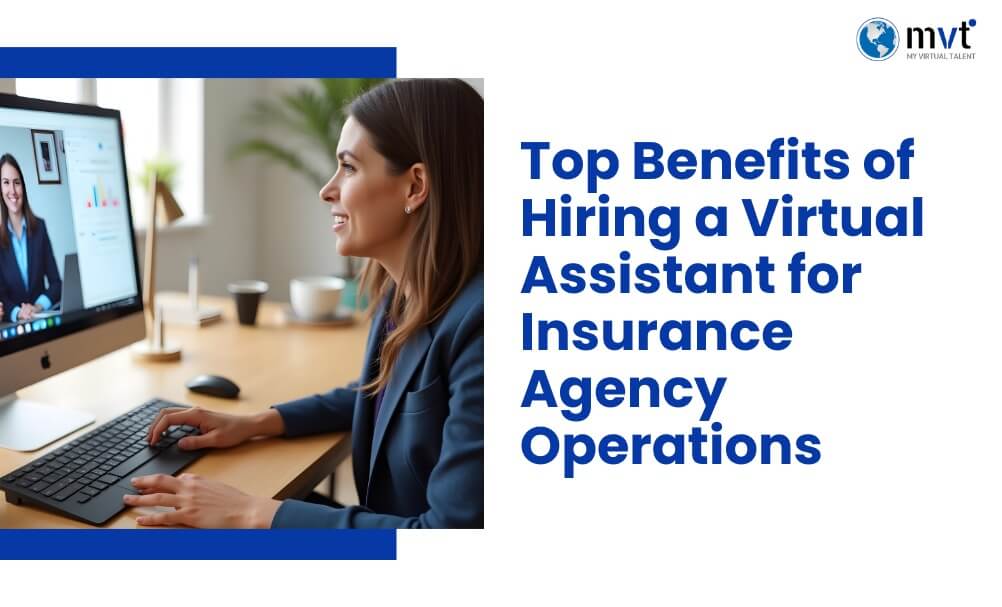
If you’re running an insurance agency, your to-do list probably never gets shorter. Between processing claims, fielding client calls, chasing renewals, and keeping up with compliance, the admin load may feel relentless. When you’re buried in paperwork, the work that grows your business- prospecting, relationship-building, upselling keeps getting pushed to tomorrow.
This is exactly why more insurance agencies are turning to virtual assistants. A virtual assistant for insurance agency operations offers a practical, affordable way to offload the tasks that eat up your day, without the commitment and overhead of a full-time hire. It’s a trend that’s picking up serious momentum across the industry, with agencies of every size, from solo brokers to mid-sized firms, embracing remote talent to stay competitive.
In this post, we’ll break down the top benefits of hiring a VA, the specific tasks they can handle, and how to find and onboard the right person for your agency.
What Can a Virtual Assistant Do for Your Insurance Agency?
A virtual assistant is a remote professional who handles administrative and operational tasks on your behalf. They work from their own location, communicate via email, phone, or project management tools, and can be hired part-time, full-time, or on a task-by-task basis.
For insurance agencies specifically, a VA can take on a wide range of responsibilities, including:
- Data entry and policy management
- Client follow-ups and appointment scheduling
- Claims processing support
- Inbound call and email correspondence handling
- Social media management and marketing support
- CRM updates and database maintenance
Some VAs are generalists who adapt to whatever you need. Others are specialists with direct experience in the insurance industry, familiar with terminology, compliance requirements, and industry-specific software. When you find the latter, the onboarding curve is minimal.
5 Benefits of Hiring a Virtual Assistant for Insurance Agency
Benefit 1: Significant Cost Savings
Bringing a full-time employee onto your team involves far more than paying their salary. Once you add expenses like benefits, payroll taxes, workspace, equipment, and training, the overall cost of that one hire can rise well beyond their base pay. In many cases, the real cost ends up being about 25–40% higher than the salary itself.
Working with a virtual assistant is structured very differently. Instead of paying a fixed monthly salary, businesses often pay only for the hours worked or for specific tasks that are completed. Because many virtual assistants work remotely from different parts of the world, their hourly rates can vary widely, mostly somewhere between $10 and $35 depending on their experience and the type of work involved. For agencies that are trying to manage expenses carefully, this difference can make a noticeable impact on the budget.
Another advantage is flexibility. If your workload increases, you can simply add more hours. When things slow down, you can reduce the hours without the long-term commitments that come with a traditional full-time hire. This kind of arrangement makes it easier for growing businesses to adjust their support based on current needs.
Benefit 2: More Time for Revenue-Generating Activities
Time is the resource insurance agents are most starved for. When your morning disappears into data entry and voicemails, client acquisition and retention get squeezed into whatever’s left.
Delegating repetitive admin tasks to a virtual assistant for insurance agency work frees up your schedule for the activities that directly drive revenue, meeting with prospects, reviewing client portfolios, cross-selling policies, and strengthening referral relationships.
Consider this scenario: an independent agency owner spends roughly 3 hours per day on administrative tasks. By handing those tasks to a VA, they reclaim 15+ hours per week. That’s time that can go toward closing new accounts or nurturing top-tier clients. Even a modest improvement in conversion or retention rates during that time could generate returns that far exceed the cost of the VA.
Benefit 3: Improved Client Experience
Clients judge your agency on how quickly and effectively you respond. A missed follow-up or delayed renewal reminder can quietly erode trust, and eventually push clients toward a competitor.
A dedicated insurance VA can be the consistent, proactive point of contact your clients deserve. They can handle inbound inquiries promptly, send renewal reminders before deadlines, follow up after claims are filed, and even reach out on birthdays or policy anniversaries. These small touches matter more than most agents realize.
Client retention is one of the most powerful growth levers in the insurance industry. Keeping an existing client is significantly less expensive than acquiring a new one. When a VA helps you deliver a more attentive, responsive experience, retention rates improve, and so does word-of-mouth referral activity.
Benefit 4: Scalability Without the Overhead
Insurance agencies often deal with uneven workloads. Open enrollment periods, natural disaster events, or seasonal policy renewals can create sudden spikes in volume that overwhelm your core team.
With a virtual admin support arrangement, you can scale up quickly when demand increases and scale back down when things normalize; no long-term employment commitments required. This kind of agility is difficult to achieve with a traditional staffing model and gives smaller agencies the ability to compete with larger operations during peak periods.
It also creates a natural path for growth. As your agency expands, you can gradually increase VA hours or bring on additional VAs with specific skill sets rather than jumping straight to a full-time hire.
Benefit 5: Access to a Broader Skill Set
The VA talent pool has expanded considerably. Platforms connecting businesses with remote assistants now host professionals with highly specialized backgrounds, CRM administration, digital marketing, basic bookkeeping, lead generation, and more.
For an insurance agency, this opens up opportunities that go beyond inbox management. A virtual assistant with marketing experience could manage your social media presence, draft email newsletters, or run targeted ad campaigns. One with CRM expertise could ensure your client database is much clean, updated, and segmented for better communication. You can get access to skills that would require a dedicated hire at a fraction of the cost.
How to Find and Hire the Right Insurance VA
Getting started with a virtual assistant is fairly simple, but taking a little time to plan the process can make things much smoother later on.
Begin by writing a clear job description. Think about the tasks you want help with and list them out in detail. It also helps to mention the tools your team uses, such as your agency management system, CRM, or communication platforms. If you prefer someone who already understands the insurance industry, include that as well. The clearer you are about your needs, the easier it will be for the right candidates to understand the role.
Next, look for candidates on reliable platforms. Services such as Belay, Time Etc, and Upwork are often used by businesses searching for experienced virtual assistants. Some agencies also choose to work with staffing companies that specialize in placing remote professionals within the insurance industry.
Once you’ve selected someone, take the time to onboard them properly. Set clear expectations from the start and explain how tasks will be assigned and tracked. Project management tools like Trello or Asana can help keep everything organized. A structured start helps build a stronger working relationship and leads to better long-term results.
Key Takeaways
The case for hiring a virtual assistant for insurance agency operations comes down to a simple trade-off: pay a reasonable hourly rate to free yourself up for the work that actually grows your business.
The benefits are tangible lower costs, higher productivity, better client experiences, flexible scalability, and access to a wider skill set than most agencies expect. Agencies that make this shift often wonder why they waited so long.
A practical first step: spend 20 minutes auditing your weekly tasks. Identify everything you do that doesn’t require your specific expertise or licensure. That list is your VA’s job description.
From there, explore platforms like Upwork or Belay to find candidates, post a clear job description, and start small, even 10 hours per week can make a meaningful difference. Consult MyVirtualTalent for more actionable tips on building a leaner, more efficient agency.
Frequently Asked Questions (FAQs)
What tasks can a VA handle for an insurance agency?
A VA can manage data entry, policy updates, appointment scheduling, client follow-ups, claims support, inbound call handling, email correspondence, CRM management, and social media. Some VAs with insurance backgrounds can also assist with compliance documentation and carrier communications.
How do I hire a virtual assistant for an insurance agency?
Start by writing a detailed job description that lists required tools and experience. Post the role on platforms like Upwork, Belay, or Time Etc. During interviews, assess candidates’ familiarity with insurance terminology and the software your agency uses. Once hired, invest in structured onboarding using tools like Trello or Asana.
Is a remote assistant for insurance agents cost-effective for small agencies?
Yes. Small agencies often benefit the most from VAs because they can access professional support without the overhead of a full-time employee. Paying only for hours worked makes it easy to control costs while still delegating time-consuming tasks.
Do VAs need to be licensed to work in an insurance agency?
No. Virtual assistants handle administrative and operational tasks, not licensed activities like selling or advising on coverage. Always ensure any tasks assigned to a VA fall outside the scope of activities that require a producer license in your state.

Looking for fresh content?
Get articles and insights from our weekly newsletter.
Recent Posts








Reduce Your Marketing Spend By 70% And Grow Your Revenue Organically 10X Faster!
Get a Free Quote Today!