
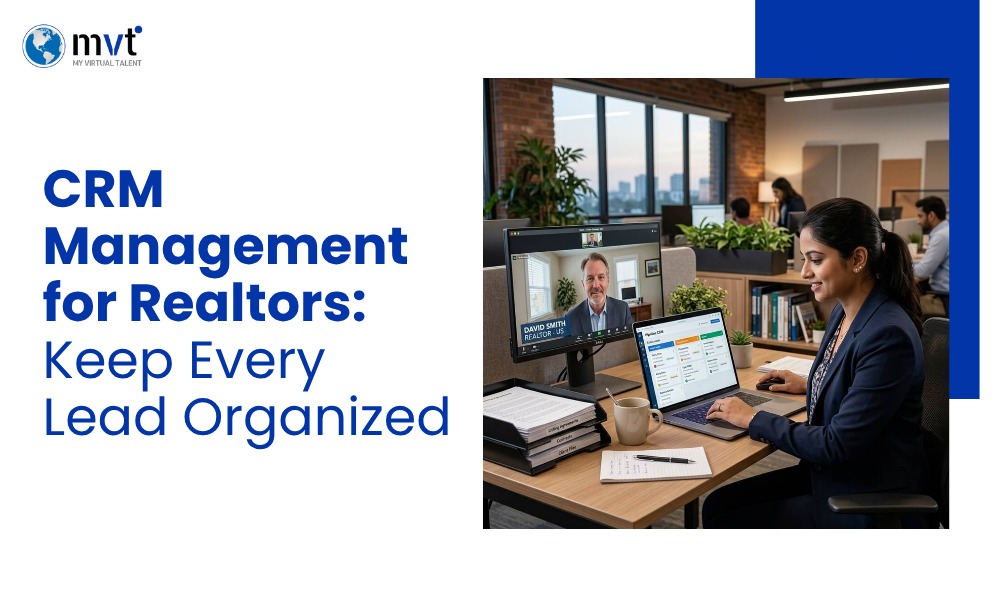
Real estate depends on strong relationships, but good follow-up is just as important. When leads are stored in spreadsheets, notes, or different apps, it becomes easy to miss a call, forget a message, or lose track of a potential client. CRM management for Realtors helps keep every lead, conversation, task, and follow-up organized in one place.
A well-managed real estate CRM gives agents a clear view of their sales pipeline. They can see which leads are new, who needs a follow-up, which clients are ready to move forward, and what action should come next. A CRM can also automate simple tasks, save time, and reduce mistakes.
For busy Realtors, staying organized can make daily work much easier. It also gives agents more time to speak with buyers, sellers, and other important contacts.
In this guide, you will learn how real estate CRM management works, which features are useful, what common mistakes to avoid, and how an experienced real estate virtual assistant can help keep your CRM accurate, organized, and up to date.
KEY TAKEAWAYS: What This Article Covers
Your quick summary before you read on
- What CRM management for Realtors actually means how it works in practice, what a well-managed CRM looks like day-to-day, and why it is the operational backbone that separates high-performing real estate agents from those constantly losing track of leads.
- Why organised lead management directly impacts sales and how timely follow-ups, accurate contact data, and structured pipelines determine whether a warm lead turns into a closed deal or quietly moves to a competitor.
- The essential CRM features every real estate agent needs from automated follow-up sequences, lead tagging, and pipeline tracking to appointment scheduling, drip campaigns, and transaction milestone alerts that keep every deal moving forward.
- The most costly CRM mistakes real estate agents make including inconsistent data entry, ignoring lead scoring, skipping follow-up automation, and using a CRM as a glorified contact list rather than an active sales engine.
- Why more Realtors are outsourcing CRM management to dedicated virtual assistants and how handing off data entry, lead nurturing, and pipeline maintenance to a skilled remote professional frees agents to focus entirely on listings, showings, and closing deals.
Quick Answer: What Is CRM Management for Realtors?
CRM management for Realtors is the process of organizing, tracking, and nurturing buyer and seller leads using a customer relationship management system. It helps real estate professionals manage contacts, automate follow-ups, schedule reminders, monitor sales pipelines, and improve client communication to increase conversions.
What Is CRM Management for Realtors?
CRM Explained
A CRM, or customer relationship management system, is software designed to help professionals manage interactions with clients and prospects. For Realtors, it serves as a central hub where every lead, contact, and conversation lives in one place.
How CRM Works
When a new lead comes in through a website form, referral, open house, or social media the CRM captures their details and places them into the pipeline. From there, the system tracks every touchpoint: emails sent, calls made, appointments scheduled, and notes logged. Automated reminders prompt agents to follow up at the right time, and reporting tools show how leads are progressing through the sales funnel.
Why Realtors Rely on CRM
The National Association of REALTORS® (nar.realtor) consistently highlights that building and maintaining client relationships is central to long-term real estate success. A CRM supports that by ensuring no lead is forgotten and no opportunity is left unattended.
Benefits of Organized Lead Management
- Fewer missed follow-ups
- Faster response times
- More consistent communication
- Greater visibility into the sales pipeline
- Higher conversion rates from lead to closed transaction
Why Every Realtor Needs a CRM System in 2026
Higher Lead Volumes
Agents today manage more leads than ever from online portals, referral networks, social media, and direct inquiries. Without a structured system, managing that volume manually is nearly impossible.
Faster Response Expectations
Buyers and sellers expect quick responses. Research consistently shows that speed-to-lead is one of the strongest predictors of conversion. A CRM with automated responses and task reminders helps agents stay ahead of expectations.
Increased Competition
More agents are entering the market, and the ones winning business are those who communicate faster and more consistently. A real estate CRM gives agents a meaningful operational advantage.
Better Customer Experience
Clients notice when their agent remembers key details, follows up on time, and keeps communication clear. CRM tools make that level of attentiveness scalable.
Improved Productivity
Automating manual tasks data entry, follow-up reminders, email sequences gives agents back hours each week. That time can be reinvested in prospecting, showings, and negotiations.
Essential Features of a Real Estate CRM
Not all CRM platforms are built the same. For Realtors, the most impactful features include:
- Contact Management: Store and organize buyer, seller, and prospect records with full interaction history
- Lead Tracking: Monitor where each lead is in the pipeline and what action is needed next
- Pipeline Management: Get a visual overview of active deals and their current stage
- Task Reminders: Automated prompts to follow up, check in, or complete key actions
- Email Integration: Send, receive, and log emails directly within the CRM
- SMS Automation: Schedule and send text messages for time-sensitive follow-ups
- Calendar Scheduling: Sync appointments and deadlines in one place
- Reporting Dashboards: Track performance metrics, conversion rates, and pipeline health over time
How CRM Management Helps Realtors Close More Deals
Organizes Every Lead
A CRM ensures every inquiry, no matter the source, is captured and categorized. No lead falls through the cracks because of a missed email or forgotten note.
Automates Follow-Ups
Follow-up sequences can be set up in advance, so leads receive timely communication without the agent needing to remember every touchpoint manually.
Tracks Conversations
Complete conversation logs mean agents always know the last thing that was said, when it was said, and what was promised. That context is critical for building trust.
Improves Response Times
With mobile CRM access and automated alerts, agents can respond to new leads within minutes dramatically improving their chances of conversion.
Builds Stronger Client Relationships
When clients feel remembered and prioritized, they’re more likely to return for future transactions and refer others. A CRM makes personalized service consistent and scalable.
Common CRM Management Mistakes Realtors Should Avoid
Even with the right tools in place, poor CRM habits can undermine results. Watch out for these common pitfalls:
- Missing Follow-Ups: Not setting reminders or checking the pipeline regularly leads to leads going cold
- Duplicate Contacts: Messy databases with repeated entries create confusion and wasted effort
- Poor Lead Segmentation: Treating all leads the same ignores where they are in the buying or selling journey
- Outdated Contact Information: Stale data means outreach goes to the wrong email addresses or phone numbers
- Ignoring Automation: Manually completing tasks that could be automated wastes time that could go toward selling
Spreadsheet vs CRM Management
Many agents start with spreadsheets but they quickly hit limitations as lead volumes grow.
| Feature | Spreadsheet | CRM System |
|---|---|---|
| Contact Organization | Basic | Advanced |
| Automated Follow-Ups | ❌ | ✔ |
| Lead Tracking | Limited | Complete |
| Reporting | Minimal | Detailed |
| Team Collaboration | Difficult | Easy |
Spreadsheets can capture data, but they can’t act on it. A CRM doesn’t just store information it helps agents use that information to take the right action at the right time.
Manual Lead Management vs CRM Automation
The difference between managing leads manually and using CRM automation is the difference between reacting and proactively staying ahead.
| Task | Manual Process | CRM Automation |
|---|---|---|
| Lead Assignment | Manual | Automatic |
| Follow-Up Reminders | Manual | Automated |
| Email Sequences | Manual | Scheduled |
| Pipeline Updates | Manual | Real-Time |
Manual processes create bottlenecks. Automation removes them and ensures consistency regardless of how busy the agent gets.
In-House CRM Management vs Outsourced CRM Support
As a Realtor’s business grows, maintaining a CRM in-house becomes increasingly time-consuming. Many agents find that outsourcing CRM support is a smarter use of resources.
| Feature | In-House Team | Outsourced CRM Support |
|---|---|---|
| Cost | Higher | Lower |
| Scalability | Limited | High |
| Expertise | Varies | Specialized |
| Administrative Work | High | Reduced |
Outsourced support gives agents access to dedicated, trained professionals who manage the CRM full-time without the overhead costs of hiring in-house staff.
Best Practices for Managing Realtor CRM Systems
Good CRM management isn’t just about having the right software. It requires consistent habits.
- Organize Contacts by Category: Segment leads by buyer, seller, past client, referral source, or stage in the pipeline
- Track Every Interaction: Log calls, emails, and meetings immediately so records stay accurate and complete
- Automate Repetitive Tasks: Set up workflows for follow-up sequences, birthday messages, and anniversary check-ins
- Clean Your Database Regularly: Remove duplicates, update contact details, and archive inactive leads on a scheduled basis
- Review Reports Monthly: Use dashboard data to identify where leads are dropping off and where conversion rates can improve
How a Real Estate Virtual Assistant Helps Manage Your CRM
Many Realtors find that CRM management, while critical, is one of the most time-consuming parts of running their business. A trained real estate virtual assistant can take that administrative load off the agent’s plate entirely.
Specifically, a virtual assistant can handle:
- Contact Updates: Keeping lead records current with accurate contact information and interaction notes
- Lead Qualification: Reviewing new inquiries and flagging high-priority prospects for immediate follow-up
- Appointment Scheduling: Coordinating showings, consultations, and calls directly in the CRM calendar
- Follow-Up Reminders: Managing and executing follow-up sequences so no lead goes cold
- CRM Data Cleanup: Merging duplicate records, removing outdated contacts, and maintaining a clean database
- Pipeline Management: Updating deal stages, tracking progress, and alerting agents to leads that need attention
With those tasks handled, agents can focus on what they do best: building relationships, showing properties, and negotiating deals.
Also see: Property Listing Services: How Professional Support Improves Sales and Why Businesses Outsource Services to Scale Faster
Why Realtors Choose MyVirtualTalent
Real estate professionals have many responsibilities throughout the day. MyVirtualTalent has virtual assistants who can help Realtors stay organized and save time. Our virtual assistants can do CRM management, follow-ups, lead updates, and schedule appointments. They can also do database management and other tasks related to the daily administration of their clients.
Our virtual assistants can manage clients’ records in real estate CRM services. This can help Realtors understand their lead activity, follow-up tasks, and the status of their pending sales.
Individual Realtors and the busy members of real estate teams can get the support they need based on MyVirtualTalent’s virtual assistant services. You can let your real estate virtual assistant do back office work while you devote yourself to meeting with clients.
Trust MyVirtualTalent to help meet your real estate needs. We provide virtual assistants who offer real estate support without the need to hire another employee.
Frequently Asked Questions: CRM Management for Realtors
What is CRM management for Realtors?
CRM management for Realtors is the practice of organizing contacts, tracking buyer and seller leads, automating follow-ups, and managing client communication through a dedicated CRM system. A well-managed CRM improves lead organization, strengthens client relationships, and helps real estate professionals close more transactions efficiently.
Why is CRM important for real estate agents?
A CRM helps real estate agents manage growing lead databases, schedule follow-ups, track conversations, and avoid missed opportunities. It creates a structured sales process that supports better client service and higher conversion rates, especially critical as lead volumes and client expectations continue to increase.
Can a virtual assistant manage a real estate CRM?
Yes. A trained virtual assistant can update contact records, organize leads by category, schedule appointments, manage follow-up sequences, maintain accurate CRM data, and support day-to-day administrative tasks allowing Realtors to spend more time on client-facing activities and deal-closing.
What features should a Realtor look for in a CRM?
The most important features for real estate CRM software include contact management, pipeline tracking, task automation, calendar integration, email and SMS communication tools, reporting dashboards, and lead segmentation. Together, these tools help Realtors stay organized and improve overall productivity.
Should Realtors outsource CRM management?
Many Realtors outsource CRM management to save time, maintain accurate databases, and ensure consistent lead follow-up without adding to their administrative workload. Outsourcing allows agents to focus on networking, showings, negotiations, and growing their business while a dedicated professional keeps the CRM organized and up to date.
Final Thoughts
Keeping leads organized can make daily work much easier for busy Realtors. Every new inquiry could become a future buyer or seller, so it is important to know who needs a call, message, or follow-up. Good CRM management for Realtors keeps this information in one place and helps agents stay on top of every opportunity.
As a real estate business grows, managing leads by hand can take too much time. A well-managed CRM keeps contact details, conversations, appointments, and follow-up tasks organized. It can also reduce missed tasks and make it easier to provide clients with timely service.
Many Realtors choose to outsource CRM and administrative work so they can focus on clients. This gives them more time for property showings, meetings, networking, negotiations, and other important sales activities.
MyVirtualTalent provides virtual assistants who can support Realtors CRM updates, lead organization, appointment scheduling, database maintenance, follow-ups, and daily administrative work. Our goal is to help real estate professionals stay organized while making better use of their time.
If routine CRM tasks are taking time away from your clients, extra support may be the right next step. Hire a virtual assistant today and give your real estate business the organized support it needs to grow.

Looking for fresh content?
Get articles and insights from our weekly newsletter.
Recent Posts







Reduce Your Marketing Spend By 70% And Grow Your Revenue Organically 10X Faster!
Get a Free Quote Today!